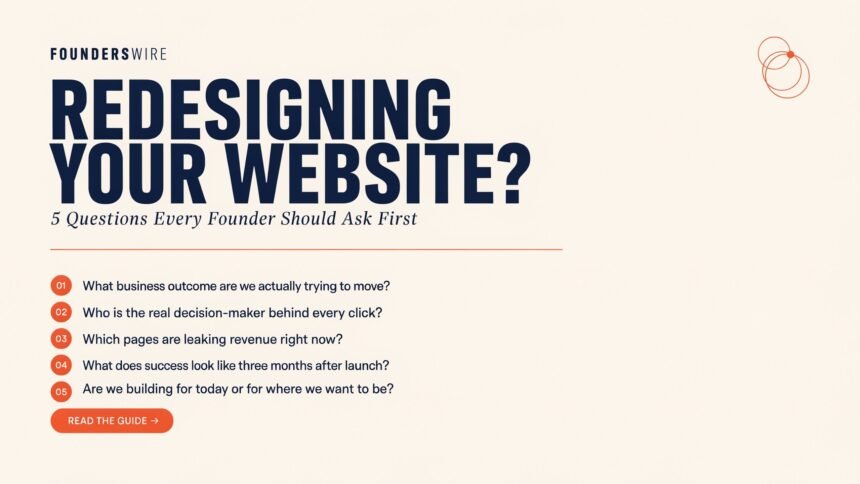
Redesigns go best when the thinking happens before the design. Before you look at templates or colour palettes, it’s worth sitting down with a few straightforward questions. Whether you hire a website developer in Melbourne or run the project yourself, these five will keep the work tied to what your business actually needs. Ask them early, write the answers down, and the rest of the project gets a lot easier.
What specific business problem are we trying to solve?
Start with the reason. “It looks dated” is a fair feeling, but it isn’t a goal. Pin down something you can measure, like more booking requests, fewer pricing questions by phone or a better checkout rate on mobile. That one sentence becomes the yardstick for every decision, and it gives you something to check against once the new site is live.
Move past looks
A good-looking site is great, and it works even harder when it has a job. Try finishing this sentence: “After the redesign, our website will help us…” Maybe it’s “book 20 more appointments a month” or “stop explaining our services on the phone.” When you’ve got that line, choices about layout, photos and wording get simpler, because you can ask whether each one moves you closer to it. Design still matters. It just does its best work when it’s aiming at something.
Identify friction
Friction is anything that slows a visitor down on the way to becoming a customer. A form with ten fields, a menu with fourteen options, a page that takes a few seconds too long to load. The quickest way to spot it is to watch someone use your site. Ask a friend or an existing customer to book something or buy something while you sit beside them, and keep quiet. You’ll learn more in ten minutes than from a week of guessing, and each thing you notice is an easy win for the new version.
What is the primary action you want visitors to take?
Every page should nudge people towards a next step. For a tradie it might be a phone call, for a café it might be a table booking, for an online shop it’s a purchase. Decide what that step is before anyone starts designing, because it shapes the whole layout. When you know the answer, the site can feel calm and easy to use.
Single focus
Pick one main action and let it lead. A physio clinic might choose “Book an appointment.” A boutique might choose “Shop the new range.” Other things, like your blog or your Instagram link, can still be there, just a little quieter. When your homepage has one clear star, visitors don’t have to weigh up ten equal choices, and more of them end up doing the thing you hoped they would.
Clear CTAs
A CTA, or call to action, is simply the button that asks for the next step. The best ones say exactly what happens when you click. “Get my free quote” beats “Submit” every time, because people know what they’re getting. Use a colour that stands out from the rest of the page, keep the words short and repeat the button at sensible points, like the top of the page and again after your main sections. Check it on your phone too. If you can tap it easily with your thumb, your customers can as well.
What is already working that we should keep?
Not everything needs to change, and that’s good news. Most sites have a few things doing real work: a page that ranks well, a service that brings in most of your leads, a layout customers keep mentioning. Find those before the redesign starts, and you can carry the best parts across and build around them.
Data-driven retention
Your analytics will tell you plenty. Look at which pages get the most visits, which ones lead to enquiries and where people spend the longest. Then add in what you hear from real customers, like reviews and the questions your team gets asked all the time. If one service page brings in half your leads, it deserves a prominent spot in the new design. Let the numbers and the feedback guide you, and keep what your audience already likes.
Protect SEO equity
Over the years your site has earned trust with Google, and that’s what helps people find you in search. It’s easy to keep. Make a list of your current page addresses before anything moves. If a page gets a new address, set up a 301 redirect so visitors and search engines land in the right spot. Keep strong page titles, headings and copy where you can, and keep your best-ranking pages in the new structure. A good developer will map this out before launch, so your visibility carries over to the new site and often improves from there.
Who is this audience, and what do they need to know in 5 seconds?
People decide quickly whether a site is for them. Picture your ideal customer landing on your homepage with a coffee in one hand and their phone in the other. Within a few seconds they want to know what you do, who it’s for and what to do next. If your site answers those three things fast, they’ll stick around.
Instant clarity
Your headline and the first section do most of the heavy lifting. Say what you offer and who it helps in plain words, then back it up with a strong photo and a visible button. “Friendly bookkeeping for Melbourne tradies” tells the whole story in five words. Skip the jargon, keep sentences short and let your photography carry some of the message. When visitors get it straight away, they’re far more willing to keep scrolling.
Messaging check
Here’s a simple test. Show your homepage to someone who’s never heard of you for five seconds, then ask what you do and who it’s for. If they nail it, you’re in good shape. If they hesitate, you’ve learned exactly which words need another go. Try it with three or four people and a pattern shows up quickly. It costs nothing, takes an afternoon and often changes the headline for the better.
Who is managing the design, copy, and development?
A redesign pulls together three different skills: design, writing and development. Projects run smoothest when everybody knows who owns which piece and when it’s due. That could be an agency, a freelancer, an in-house team or a mix. Sorting out roles at the start means fewer back-and-forth emails later and a happier pace all round.
Unified plan
Put it all in one shared plan: the timeline, the milestones, who writes the copy, who approves it, who supplies the photos and who gives the final sign-off. Ask for a single point of contact who keeps the pieces together. Short, regular check-ins, even fifteen minutes a week, keep things moving and let you steer early. When design, words and development grow together, the finished site feels like one piece, not three separate ones.
Platform control
Your website is a business asset, so you should hold the keys. Confirm that the domain, hosting and site files are registered in your name. Ask which platform it’s being built on, whether that’s WordPress, Shopify or Webflow, and why it suits your goals. Find out how you’ll update text and images yourself, and ask for a short training session at handover. Owning your platform means you can adjust things when your business changes, without waiting on anyone.
Conclusion
A good redesign starts with good questions. Know the problem you’re solving, pick one action to lead with, keep what’s already working, get your message across in five seconds and agree who’s doing what. With those answers in your pocket, you’ll brief any developer with confidence and get a better result. When you’re ready to start, the team at Make My Website would love to chat.